Stroke has a new indicator.
They say if you email this to ten people, you stand a chance of saving one life. Will you send this along?
Blood Clots/Stroke - They Now Have a Fourth Indicator, the Tongue
I will continue to forward this every time it comes around!
STROKE: Remember the *1st Three Letters*....
* S. T. R. *
STROKE IDENTIFICATION:
Scenario:- During a BBQ, a woman stumbled and took a little fall - she
assured everyone that she was fine (they offered to call paramedics)...
she said she had just tripped over a brick because of her new shoes.
They got her cleaned up and got her a new plate of food. While she
appeared a bit shaken up, Jane went about enjoying herself the rest of
the evening.
Jane's husband called later telling everyone that his wife had been taken to the hospital - (at 6:00 PM Jane passed away)
She had suffered a stroke at the BBQ.
Had they known how to identify the signs of a stroke, perhaps Jane would be with us today.
Some don't die.
They end up in a helpless, hopeless condition instead.
It only takes a minute to read this.
A neurologist says that if he can get to a stroke victim within *3
hours he can totally reverse the effects of a stroke...totally*.
He said the trick was getting a stroke recognized, diagnosed, and then
getting the patient medically cared for within *3 hours*, which is
tough. *RECOGNIZING A STROKE*
Thank God for the sense to remember the *'3' steps, STR.* Read and Learn!
Sometimes symptoms of a stroke are difficult to identify.
Unfortunately, the lack of awareness spells disaster.
The stroke victim may suffer severe brain damage when people nearby fail to recognize the symptoms of a
stroke.
Now doctors say a bystander can recognize a stroke by *asking three simple questions*: ✅ *S*Ask the individual to *SMILE*. ✅ *T* Ask the person to *TALK* and SPEAK A SIMPLE SENTENCE (Coherently)
(i.e. Chicken Soup) ✅ *R*Ask him or her to *RAISE BOTH ARMS.*
If he or she has trouble with ANY ONE of these.
As the obesity rate continues to rise, we start to hear more and more about the importance of avoiding eating late at night. Many researches show that eating late has negative effects on your
health. One of the most serious consequences is gaining weight. Another
important reason why you may want to avoid this bad habit is due to its
negative effects on your sleep. You need to get up to use the restroom
during the night for many times. If you have some private reasons
making you have to snack on something in the evening, consider choosing
fruits, vegetables or other products which are low in fat, calories and
water content. Remember to keep away from the 7 following food
categories. 1. Greasy or fat-filled foods Several food types
which are greasy, heavy and fatty should be eliminated from your dinner.
The reason is that they not only make you feel tired and sluggish in
the morning of the next day, but they also make your stomach get tired
and overworked. In addition to gaining weight, eating high-fat foods
before going to bed is the main cause of sleep disturbances because you
will have nighttime trips to the bathroom. A bowl of ice cream loaded with fat and sugar should not be taken at night in order to control your weight and sleep well. Consuming too many fast food items can make your sleep interrupted.
Moreover, fast foods are highest in Trans fat which causes stroke,
diabetes and coronary heart disease. 2. High-carbohydrate or sugary foods A small piece of sweet cake can help you slumber; nevertheless, if you
eat a huge slice of chocolate cake, this will lead to an adverse effect.
The reason is that the spike in your blood-sugar levels could cause
your energy levels to spike and plummet, disrupting your sleep in the
process. Cake, cookies, or other desserts as well as car by snacks like
crackers or white bread are foods listed in this category. Pastas
are straight carbohydrates, and if you’re going to bed right after
eating, that’s all going to turn into fat.Chocolate cake tastes good but
ends up bad. 3. Red meat and other proteins Eating red meats
late at night makes it difficult for you to get deep into sleep since
your stomach is digesting foods too hard. Dietitians show that red meat
may actually affect you the worst, but eating a chicken or pork with
large portions would have the same effect as well. In fact, you don't
need totally avoid protein foods for your late meal, just remember to
eat with a small quantity or opt for a glass of warm milk or some
sleep-friendly cabs.Red meats should not be eaten too much at night. 4. Spicy foods When you're craving something to eat late at night, stay away from the
hot sauce. Spicy and peppery foods are not beneficial for your stomach.
In addition, chemicals loaded in spicy foods can stimulate your senses,
making it hard to fall asleep. Many people feel heartburn after eating spicy food. 5. Hidden Caffeine foods A cup of coffee contains caffeine which can lead to sleep disturbances.
Even other less obvious caffeine sources such as cola, tea, chocolate
and decaffeinated coffee should be avoided being taken at night. For a
better sleep, cut all caffeine from your diet four to six hours before
bedtime. It is suggested to cut all caffeine from your diet four to
six hours before bedtime.If you are sensitive with caffeine, you had
better not drink green tea before going to bed. 6. Big portions Lying down with a full belly can make you uncomfortable and find hard to
start sleeping, since the digestive system slows down when you sleep.
Keep the total calorie amount under 200 so you won't have any problem
with going and staying asleep. Make sure to eat a reasonable amount of
foods and finish a heavy meal at least four hours before bedtime.You
will feel uncomfortable with a full stomach at night. 7. Diuretic foods A diuretic is defined as either a food, herb, beverage or anything else
that aides in the process of making your body release more urine. That
is the reason why when you drink much water or eat celery at night, you
should go to the bathroom more often. Thus, to have a restful night,
nutritionists suggest you should limit the consumption of foods with a
large amount of water. Keeping hydrated throughout the day is great for
your body, but remember to cut down your fluid intake before bed.
A daughter complained to her father about her life and how things
were so hard for her. She did not know how she was going to make it and
wanted to give up. She was tired of fighting and struggling. It seemed
as one problem was solved a new one arose. Her father, a chef, took her
to the kitchen. He filled three pots with water and placed each on a
high fire. Soon the pots came to a boil. In one he placed carrots, in
the second he placed eggs, and in the last he placed ground coffee
beans. He let them sit and boil, without saying a word.
The daughter sucked her teeth and impatiently waited, wondering what he
was doing. In about twenty minutes he turned off the burners. He fished
the carrots out and placed them in a bowl. He pulled the eggs out and
placed them a bowl. Then he ladled the coffee out and placed it in a
mug. Turning to her he asked, 'Darling, what do you see?' 'Carrots,
eggs, and coffee,' she replied. He brought her closer and asked her to
feel the carrots. She did and noted that they were soft. He then asked
her to take an egg and break it. After pulling off the shell, she
observed the hard-boiled egg. Finally, he asked her to sip the coffee.
She smiled as she tasted its rich aroma. She humbly asked. 'What does it
mean, Father?'
He explained that each of them had faced the same adversity, boiling
water, but each reacted differently. The carrot went in strong, hard,
and unrelenting. But after being subjected to the boiling water, it
softened and became weak. The egg had been fragile. Its thin outer shell
had protected its liquid interior. But after sitting through the
boiling water, its inside became hardened. The ground coffee beans were
unique, however. After they were in the boiling water, they had changed
the water. 'Which are you?' he asked his daughter. 'When adversity
knocks on your door, how do you respond? Are you a carrot, an egg, or a
coffee bean?' How about you, my friend? Are you the carrot that seems hard, but with
pain and adversity you wilt and become soft and lose your strength? This
article is sponsored by Hongxing Machinery specializing in mining
equipment manufacturing such as vibrating screen and cone crusher. Are
you the egg, which starts off with a malleable heart? Were you a fluid
spirit, but after a death, a breakup, a divorce, or a layoff have you
become hardened and stiff? Your shell looks the same, but are you bitter
and tough with a stiff spirit and heart? Or are you like the coffee
bean? The bean changes the hot water, the thing that is bringing the
pain, to its peak flavor when it reaches 212 degrees Fahrenheit. When
the water gets the hottest, it just tastes better. If you are like the
bean, when things are at their worst, you get better and make things
better around you.
Ask yourself how you handle adversity. Are you a carrot, an egg, or a
coffee bean? The environments shown in the pictures below depict loneliness.How will you feel if you find yourself in such places?Know that you are stronger than any issue you come across in life.You are only limited by your thoughts.
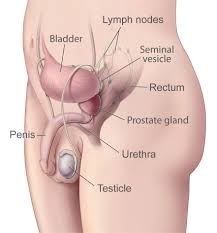
After
age 40, for reasons that may be hormonal, the prostate gland begins to
enlarge. From 20 grams it may grow to almost 100 grams. As it enlarges,
it squeezes the urethra and the man begins to notice changes in the way
he urinates.
His urine stream is weak, cannot travel a long distance and sometimes may come straight down on his legs.
TERMINAL DRIPPING:
The man begins to notice that after urinating urine still drops on his pants.
HESITANCY
At this point you wait longer for the urine flow to start. There are 2
valves that must open for you to urinate – the internal and external
sphincters. Both open but because of obstructions in the urethra, you
wait longer for the flow to start.
INCOMPLETE EMPTYING
You have this feeling immediately after urinating that there is still something left.
As all these things happen, the bladder begins to work harder to
compensate for the obstruction in the urethra. The frequency of
urination goes up. Urgency sets in. Sometimes you have to practically
run into the toilet. Nocturnal also becomes common. You wake up more than
2 times at night to urinate.
Stored urine gets infected and there may be burning sensation when urinating.
Stored urine forms crystals. Crystals come together to form stone
either in the bladder or in the kidney. Stones may block the urethra.
Chronic urinary retention sets in. The bladder stores more and more
urine. The size of the bladder is 40 - 60cl. A bottle of coke is 50cl.
As the bladder stores more urine it can enlarge up to 300cl. An
overfilled bladder may leak and this leads to wetting / urinary
incontinence. Also the volume may put pressure on the kidney and may
lead to kidney damage.
What may likely bring the man to hospital is acute urinary retention. He wakes up one day and he is not able to pass urine.
Everything I have described above is associated with prostate enlargement, technically called benign prostate hyperplasia.
There are other diseases of the prostate like:
1. Prostatitis – inflammation of the prostate
2. Prostate cancer – cancer of the prostate.
This discussion is on prostate enlargement.
I have bad news and good news.
The good news is that there are life style changes that can help the man after 40 to maintain optimum prostate health.
NUTRITION
Look at what you eat. 33% of all cancers, according to the US National Cancer Institute is related to what we eat.
Red meat everyday triples your chances of prostate disease. Milk
everyday doubles your risk. Not taking fruits / vegetables daily
quadruples your risk.
Tomatoes are very good for men. If that is
the only thing your wife can present in the evening, eat it with joy. It
has loads of lycopene. Lycopene is the most potent natural antioxidant.
Foods that are rich in zinc are also good for men. We recommend pumpkin seeds.
Zinc is about the most essential element for male sexuality and fertility.
Men need more zinc than women. Every time a man ejaculates he loses
15mg of zinc. Zinc is also important for alcohol metabolism. Your liver
needs zinc to metabolize alcohol.
ALCOHOL CONSUMPTION
As
men begin to have urinary symptoms associated with prostate enlargement,
it is important they look at alcohol consumption. More fluid in means
more fluid.
EXERCISE
Exercise helps build the muscle tone.
Every man should exercise. Men over 40 should avoid high impact
exercise like jogging. It puts pressure on the knees. Cycling is bad
news for the prostate. We recommend brisk walking.
SITTING
When we sit, two-third of our weight rests on the pelvic bones. Men who
sit longer are more prone to prostate symptoms. Do not sit for long
hours. Walk around as often as you can. Sit on comfortable chairs. We
recommend a divided saddle chair if you must sit long hours.
DRESSING
Men should avoid tight underwear. It impacts circulation around the
groin and heats it up a bit. While the physiological temperature is 37
degrees, the groin has an optimal temperature of about 33 degrees. Pant
is a no - no for men. Wear boxers. Wear breathable clothing.
SMOKING
Avoid smoking. It affects blood vessels and impacts circulation around the groin.
SEX
Regular sex is good for the prostate.
Celibates are more prone to illness. While celibacy is a
moral decision, it is not a biological adaptation. Your prostate gland
is designed to empty its contents regularly.
Thought: when someone shared something of value with you and benefit
from it. You have a moral obligation to share it with others because
someone in your friend's sight be saved.
Share with others.
The subject is very important Please post the message on the largest number of your acquaintances:
"Pieces of lemon in a glass of hot water can save you for the rest of
your life," says Professor Chen Horin, chief executive of the Beijing
Military Hospital.
Even if you are busy, you should look at this message and pass it on to others!
Hot lemons can kill cancer cells!
Cut the lemon into three pieces and place it in a cup, then pour hot
water, it will become (alkaline water), drinking it every day will
certainly benefit everyone.
Hot lemons can once again release an anti-cancer drug.
Hot lemon juice affects cancerous tumors and
has shown treatment for all types of cancer.
Treatment with this extract will only destroy the malignant cells and will not affect healthy cells.
Second: The acids and monocarboxylic acid in lemon juice can regulate
hypertension and protect narrow arteries, adjust blood circulation and
reduce blood clotting.
After reading, tell someone else and pass it on to someone you love and take care of your health
*Question 1:* What are the thumb rules for a layman to take care of his or her heart?
*Answer:*
1. Diet — Less of carbohydrate, more of protein, less oil
2. Exercise — Half an hour’s walk, at least five days a week; avoid lifts and avoid sitting for a longtime
3. Quit smoking
4. Control weight
5. Control BP — Blood pressure and Sugar
*Question 2:* Can we convert fat into muscles?
*Answer:* It is a dangerous myth. Fat and muscles are made of two different tissues — fat is fat, ugly and harmful. Muscle is muscle. Fat can never be converted into a muscle.
*Question 3:* It’s still a grave shock to hear that some apparently healthy person gets a cardiac arrest. How do we understand it in perspective?
*Answer:* This is called silent attack. That is why we recommend everyone past the age of 30 to undergo routine health checkups.
*Question 4:* Are heart diseases hereditary?
*Answer:* Yes
*Question 5:* What are the ways in which the heart is stressed? What practices do you suggest to De-stress?
*Answer:* Change your attitude towards life. Do not look for perfection in everything in life.
*Question 6:* Is walking better than jogging or is more intensive exercise required to keep a healthy heart?
*Answer:* Walking is better than jogging, since jogging leads to early fatigue and injury to joints.
*Question 7:* You have done so much for the poor and needy. What has inspired you to do so?
*Answer:* Mother Theresa, who was my patient.
*Question 8:* Can people with low blood pressure suffer heart diseases?
*Answer:* Extremely rare.
*Question 9:* Does cholesterol accumulate right from an early age (I’m currently only 22) or do you have to worry about it only after you are above 30 years of age?
*Answer:* Cholesterol accumulates from childhood.
*Question 10:* How do irregular eating habits affect the heart ?
*Answer:* You tend to eat junk food when the habits are irregular and your body’s enzyme release for digestion gets confused.
*Question 11:* How can I control cholesterol content without using medicines?
*Answer:* Control diet, walk and eat walnut.
*Question 12:* Which is the best and worst food for the heart?
*Answer:* Fruits and vegetables are the best and oils the worst.
*Question 13:* Which oil is better — groundnut, sunflower, olive?
*Answer:* All oils are bad.
*Question 14:* What is the routine checkup one should go through? Is there any specific test?
*Answer:* Routine blood test to ensure sugar, cholesterol is okay. Check BP, Treadmill test after an echo.
*Question 15:* What are the first aid steps to be taken on a heart attack?
*Answer:* Help the person into a sleeping position, place an aspirin tablet under the tongue with a sorbitrate tablet if available, and rush him or her to a coronary care unit, since the maximum casualty takes place within the first hour.
*Question 16:* How do you differentiate between pain caused by a heart attack and that caused due to gastric trouble?
**Answer:* Extremely difficult without ECG.
*Question 17:* What is the main cause of a steep increase in heart problems among youngsters? I see people of about 30–40 years of age having heart attacks and serious heart problems.
*Answer:* Increased awareness has increased incidents. Also, sedentary lifestyles, smoking, junk food, lack of exercise in a country where people are genetically three times more vulnerable for heart attacks than Europeans and Americans.
*Question 18:* Is it possible for a person to have BP outside the normal range of 120/80 and yet be perfectly healthy?
*Answer:* Yes.
*Question 19:* Marriages within close relatives can lead to heart problems for the child. Is it true?
*Answer
:* Yes, co-consanguinity leads to congenital abnormalities and you may NOT have a software engineer as a child.
*Question 20:* Many of us have an irregular daily routine and many a times we have to stay late nights in office. Does this affect our heart? What precautions would you recommend?
*Answer
:* When you are young, nature protects you against all these irregularities. However, as you grow older, respect the biological clock.
*Question 21:* Will taking anti-hypertensive drugs cause some other complications (short/long term)?
*Answer
:* Yes, most drugs have some side effects. However, modern anti-hypertensive drugs are extremely safe.
*Question 22:* Will consuming more coffee/tea lead to heart attacks?
*Answer:* No.
*Question 23:* Are asthma patients more prone to heart disease?
*Answer
:* No.
*Question 24:* How would you define junk food?
*Answer
:* Fried food like Kentucky, McDonalds, Samosas, and even Masala Dosas.
*Question 25:* You mentioned that Indians are three times more vulnerable. What is the reason for this, as Europeans and Americans also eat a lot of junk food?
*Answer:* Every race is vulnerable to some disease and unfortunately, Indians are vulnerable for the most expensive disease.
*Question 26:* Does consuming bananas help reduce hypertension?
*Answer:* No.
*Question 27:* Can a person help himself during a heart attack (Because we see a lot of forwarded e-mails on this)?
*Answer:* Yes. Lie down comfortably and put an aspirin tablet of any description under the tongue and ask someone to take you to the nearest coronary care unit without any delay and do not wait for the ambulance since most of the time, the ambulance does not turn up.
*Question 28:* Do, in any way, low white blood cells and low hemoglobin count lead to heart problems?
*Answer:* No. But it is ideal to have normal hemoglobin level to increase your exercise capacity.
*Question 29:* Sometimes, due to the hectic schedule we are not able to exercise. So, does walking while doing daily chores at home or climbing the stairs in the house, work as a substitute for exercise?
*Answer:* Certainly. Avoid sitting continuously for more than half an hour and even the act of getting out of the chair and going to another chair and sitting helps a lot.
*Question 30:* Is there a relation between heart problems and blood sugar?
*Answer:* Yes. A strong relationship since diabetics are more vulnerable to heart attacks than non-diabetics.
*Question 31:* What are the things one needs to take care of after a heart operation?
*Answer
:* Diet, exercise, drugs on time, Control cholesterol, BP, weight.
*Question 32:* Are people working on night shifts more vulnerable to heart disease when compared to day shift workers?
*Answer:* No.
*Question 33:* What are the modern anti-hypertensive drugs?
*Answer:* There are hundreds of drugs and your doctor will chose the right combination for your problem, but my suggestion is to avoid the drugs and go for natural ways of controlling blood pressure by walk, diet to reduce weight and changing attitudes towards lifestyles.
*Question 34:* Does aspirin or similar headache pills increase the risk of heart attacks?
*Answer:* No.
*Question 35:* Why is the rate of heart attacks more in men than in women?
*Answer:* Nature protects women till the age of 45. (Present Global census show that the Percentage of heart disease in women has increased than in men )
*Question 36:* How can one keep the heart in a good condition?
*Answer:* Eat a healthy diet, avoid junk food, exercise everyday, do not smoke and, go for health checkups if you are past the age of 30 ( once in six months recommended).
_Please, don’t hoard knowledge. It takes sharing of knowledge to
discover and understand the world in which we live. Please send it and inform your friends.